
Japandi is an interior style that blends Japanese minimalism with Scandinavian warmth and functionality. The name says it plainly — Japan + Scandi — and so does the look: clean lines, honest natural materials, a muted palette, and a deep respect for craftsmanship. The result is a home that feels calm, uncluttered, and quietly luxurious, without ever feeling cold or clinical.
If you are drawn to spaces that feel serene rather than busy, where every object earns its place and natural wood is allowed to be the hero, you are already thinking in Japandi. This guide explains where the style comes from, the principles behind it, and how to bring it into your own home.
Where Japandi comes from
Japandi sits at the meeting point of two design traditions that, despite being separated by continents, share a surprising amount of common ground.
From Japan comes the philosophy of wabi-sabi — finding beauty in imperfection, simplicity, and the natural ageing of materials. A knot in the wood, a slight variation in grain, the way oak deepens in colour over years: in the Japanese view, these are not flaws to hide but character to celebrate.
From Scandinavia comes the idea of hygge and a belief that the home should be a place of comfort, light, and calm. Scandinavian design prizes function, soft natural light, and warm, tactile materials that make a space feel lived-in and welcoming.
Put them together and the overlap becomes obvious. Both traditions reject clutter. Both love natural materials. Both believe that good design should last for decades, not seasons. Japandi simply names what happens when those two sensibilities are combined.
The core principles of Japandi
1. Minimalism with warmth
Japandi is minimalist, but it is never austere. Where pure minimalism can feel empty, Japandi softens the space with natural texture and warm tones. The goal is calm, not absence — a room that breathes.
2. Natural, honest materials
Solid wood, linen, stone, ceramic, paper, and wool sit at the heart of the style. Materials are left close to their natural state, with their grain, weave, and texture on full display. Solid oak is a Japandi staple precisely because it is honest: dense, durable, and beautiful as it ages.
3. A muted, grounded palette
Think warm whites, soft greys, beige, taupe, and the natural browns of wood, accented occasionally with deeper charcoal or black. Colours are quiet and earthy, chosen to recede rather than shout.
4. Function before decoration
In Japandi, every piece has a purpose. Storage is considered, surfaces are kept clear, and objects are chosen with intention. Nothing is there simply to fill a gap.
5. Craftsmanship and longevity
Japandi favours fewer, better things. A single well-made piece, built to last generations, is worth more than a room full of disposable furniture. This is where the style’s quiet luxury really lives — in the quality you feel rather than the labels you see.
Japandi colours and materials
If you want a simple starting point, build your palette in layers:
- Base: warm white or soft greige walls, with a pale or natural wood floor.
- Wood tones: natural oak as the anchor — on furniture, shelving, and accents.
- Soft textiles: linen, cotton, and wool in oatmeal, sand, and stone tones.
- Quiet contrast: a touch of matte black or deep charcoal to give the room structure.
- Natural accents: ceramic, a single dried branch, handmade stoneware — restrained, never cluttered.
The key is restraint. A Japandi room is built from a small number of natural materials, repeated and layered, rather than many competing colours and finishes.
Japandi vs Scandinavian vs minimalist
These three styles are often confused, because they share the same family. Here is how they differ:
- Scandinavian is light, airy, and cosy, often with white walls, pale woods, and pops of soft colour. Its priority is comfort and brightness.
- Minimalism is the most stripped-back of the three — clean, geometric, and sometimes cool or stark, with an emphasis on empty space.
- Japandi takes the warmth of Scandinavian design and the disciplined simplicity of Japanese minimalism, then grounds both in natural materials and visible craft. It is warmer than minimalism and more refined and earthy than Scandinavian.
In short: if Scandinavian is cosy and minimalism is bare, Japandi is calm.
How to bring Japandi into your home
You do not need to renovate to live with Japandi. Start small, room by room, and let the style build.
In the bedroom
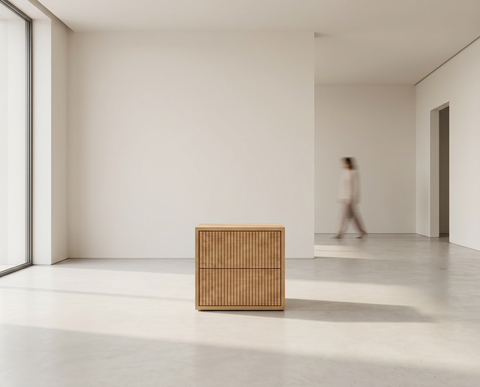
Keep the palette soft and the surfaces clear. A solid oak nightstand or bedside table with a clean silhouette sets the tone instantly — one lamp, one book, nothing more. Natural linen bedding completes the feeling of calm.
In the hallway and living space
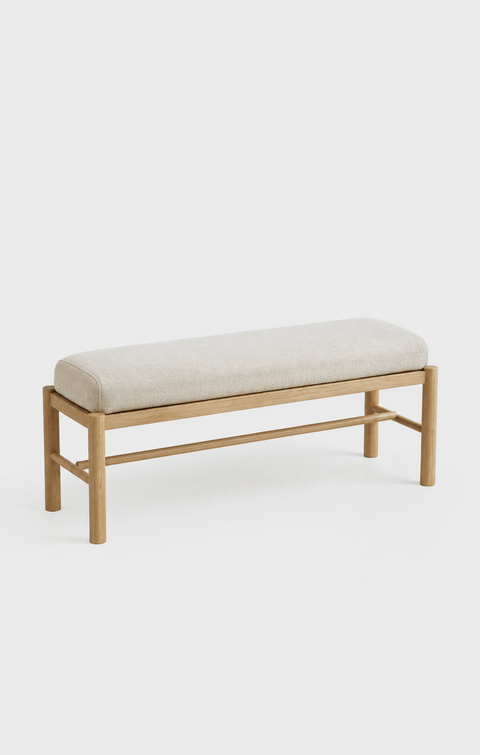
A slim oak console table against a bare wall is a perfect Japandi gesture: functional, sculptural, and quiet. Style it with a single ceramic vessel and leave the rest of the surface open. A low oak bench by the entrance adds warmth and purpose without crowding the space.
Everywhere
Declutter first — Japandi begins with what you remove. Then add back only what is useful or genuinely loved. Choose natural materials over synthetic ones, and favour a few well-made pieces over many cheap ones.
Why oak is the natural choice for Japandi
Of all the materials that suit this style, solid oak may be the most fitting. It carries its grain openly, varies from piece to piece, and grows more beautiful with age — developing a warm patina that tells the story of the home it lives in. That is wabi-sabi made physical: beauty that deepens with time rather than fading.
At FUKUI, this is the whole idea. We craft solid oak furniture by hand in Poland — no veneers, no shortcuts — designed to become a lasting part of calm, considered homes. You can read more about the thinking behind the brand on our About page, or browse the full range in the shop.
Frequently asked questions
What does Japandi mean?
Japandi is a blend of the words “Japanese” and “Scandi” (Scandinavian). It describes an interior style that combines Japanese minimalism and the wabi-sabi philosophy with Scandinavian warmth and functionality.
What are the main colours of Japandi?
Japandi uses a muted, natural palette: warm whites, soft greys, beige and taupe, the natural browns of wood, and occasional accents of matte black or charcoal.
Is Japandi still in style?
Yes. Because Japandi is built on timeless principles — natural materials, simplicity, and craftsmanship — rather than passing trends, it has remained popular and tends to age well rather than feeling dated.
What furniture works best for a Japandi home?
Solid wood furniture with clean lines and honest materials works best — pieces such as oak nightstands, console tables, and benches that are functional, well-made, and built to last.
What is the difference between Japandi and Scandinavian style?
Scandinavian style focuses on lightness, brightness, and cosiness. Japandi keeps that warmth but adds the disciplined simplicity and earthy, grounded materials of Japanese design, resulting in a calmer, more refined look.