
When you’re investing in furniture meant to last, one question matters more than almost any other: is it solid wood, or veneer? The two can look almost identical in a showroom or a photograph — but they age very differently, repair very differently, and hold their value very differently. This guide explains what each one really is, how to tell them apart, and which is the better choice for furniture you want to keep for decades.
In short: solid oak is real oak throughout, prized for its durability and the way it improves with age. Veneer is a thin layer of real wood bonded to a cheaper core such as MDF or particleboard — lighter and less expensive, but far less forgiving over a lifetime. The details are where it gets interesting.
What is solid oak?
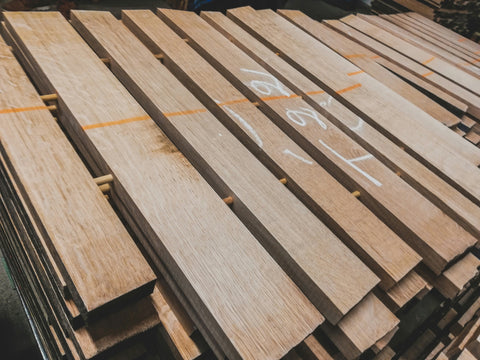
Solid oak furniture is made from genuine oak boards, the same material all the way through. There is no hidden core and no surface layer to wear away — what you see on the outside is what the piece is made of on the inside.
This is why solid oak is so durable. It resists dents and everyday wear, it can be sanded and restored, and it carries its grain honestly across every surface and edge. Properly cared for, a solid oak piece can outlast its original owner and still look beautiful generations later.
What is veneer?
A veneer is a very thin slice of real wood — often less than a millimetre thick — glued onto a substrate underneath. That substrate is usually an engineered board such as MDF (medium-density fibreboard) or particleboard, which is far cheaper than solid timber.
The result looks like wood on the surface because, technically, it is. But the structure beneath is not. This affects everything from how the piece handles moisture to whether it can ever be repaired.
Is veneer “real wood”?
This is the question that trips most people up. The veneer layer itself is real wood — a genuine slice of oak, walnut, or whatever the surface shows. So a salesperson can honestly say a piece “features real oak.”
The catch is the core. In most veneered furniture, the structure underneath is engineered board, not solid timber. So the honest answer is: the surface is real wood, but the piece as a whole is not solid wood. For furniture you intend to keep, that distinction is everything.
Solid oak vs veneer: the key differences
- Durability: Solid oak resists knocks and wear across its whole thickness. A veneer can chip, peel, or bubble where the thin top layer is damaged or exposed to moisture.
- Repairability: Solid oak can be sanded back and refinished, removing scratches and refreshing the surface. Once a veneer is worn through, the engineered core shows — and it cannot be sanded out.
- Lifespan: Solid oak is measured in generations. Veneered furniture over an engineered core typically has a much shorter useful life.
- Moisture and heat: Engineered cores like particleboard can swell and crumble if they get wet. Solid oak handles humidity far more gracefully.
- Weight and feel: Solid oak is noticeably heavier and feels substantial. Veneered pieces are lighter and can sound hollow.
- Value over time: Quality solid oak holds its value and can even be passed down or resold. Veneered furniture generally depreciates quickly.
How to tell solid oak from veneer
Before you buy, a few quick checks reveal the truth:
- Follow the grain around edges. On solid oak, the grain flows continuously over the top and down the sides. On veneer, the pattern often stops abruptly or doesn’t match at corners and edges.
- Look at the end grain. Solid wood shows the cross-section of the grain on its ends. A veneered edge may instead show a thin wood layer over a different-looking core, sometimes finished with a strip of edge banding.
- Check the underside and back. Hidden surfaces on solid pieces are usually still real wood. Veneered pieces often reveal a plain engineered board where it doesn’t show.
- Lift it. Solid oak is heavy. If a large piece feels surprisingly light, it likely has an engineered core.
- Mind the price. Genuine solid oak costs more to produce. If a large “oak” piece is unusually cheap, it is almost certainly veneered.
When veneer actually makes sense
To be fair, veneer is not always the wrong choice — and good design uses materials honestly. Veneer can be sensible for very large flat panels, where a single sheet of solid wood would be prone to warping. It also makes rare or exotic woods more affordable, and reduces weight on big pieces.
There is also an important distinction between veneer over particleboard — the budget construction that worries solid-wood buyers — and engineered wood used for genuine structural reasons. High-grade plywood, for example, can be more dimensionally stable than solid wood in certain panels, and a thoughtful maker may use it deliberately, not as a shortcut. The key is transparency: a good brand tells you exactly what a piece is made of and why.
How FUKUI builds its furniture
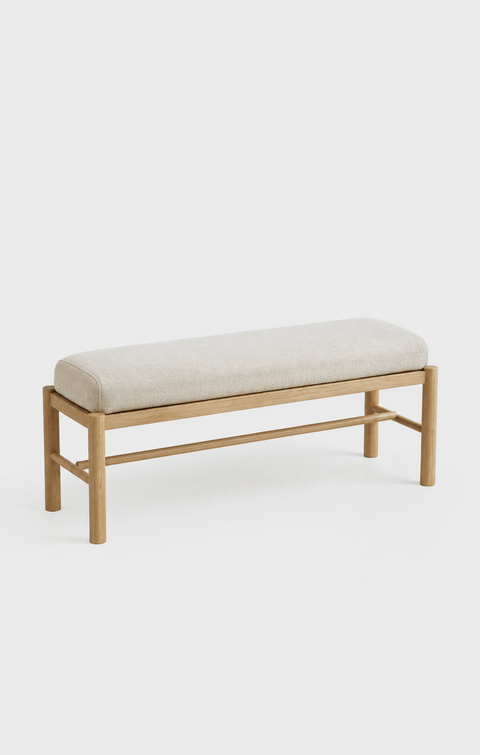
At FUKUI, the visible structure of every piece is genuine solid oak — no veneers over hidden cores, no shortcuts. Where engineering genuinely benefits from it, such as internal frames and certain panels, we use structural-grade birch plywood as a deliberate stability choice, not a cost-cutting one. The result is furniture that is honest about what it is: solid oak where it counts, sound engineering where it adds strength, and full transparency throughout.
It’s the same reason oak rewards good care and ages so well — you can read more in our guide to caring for solid oak furniture, or explore the full range in the shop. To understand the thinking behind the brand, visit our About page.
Frequently asked questions
Is solid oak better than veneer?
For longevity, durability, and repairability, solid oak is the better choice — it can be sanded and restored and lasts for generations. Veneer can look similar but typically has a much shorter useful life when built over an engineered core.
Is veneer real wood?
The veneer layer is a genuine thin slice of real wood, but it is usually bonded to a core of MDF or particleboard. So the surface is real wood while the piece as a whole is not solid wood.
How can I tell if furniture is solid oak or veneer?
Check whether the grain flows continuously around edges, look at the end grain and the hidden underside, and consider the weight and price. Solid oak is heavy, grain-continuous, and costs more to produce.
Does veneer furniture last?
It depends on the core. Veneer over a solid or high-quality engineered base can last reasonably well, but veneer over particleboard tends to chip, peel, or swell with moisture and cannot be repaired once worn through.
Is engineered wood always a shortcut?
Not necessarily. High-grade plywood is sometimes used deliberately for stability in panels and frames, where it can outperform solid wood. The difference between honest engineering and a cost-cutting shortcut is transparency about what’s used and why.