
Japandi is what happens when Japanese restraint meets Scandinavian warmth — wabi-sabi’s love of imperfection, hygge’s love of comfort. It suits bedrooms better than any other room, because a bedroom has exactly one job: calm. Here is how to get the look without your room feeling like a showroom.
Start with the palette
Japandi lives in a narrow, warm band: paper white, oat, sand, clay, oak — and one deep accent, usually charcoal, ink or forest green. The trick is warmth: Scandinavian white alone can feel clinical, so every pale surface needs a warm neighbour. Limit yourself to five colours in the whole room and let texture do the talking.
Real materials, few of them
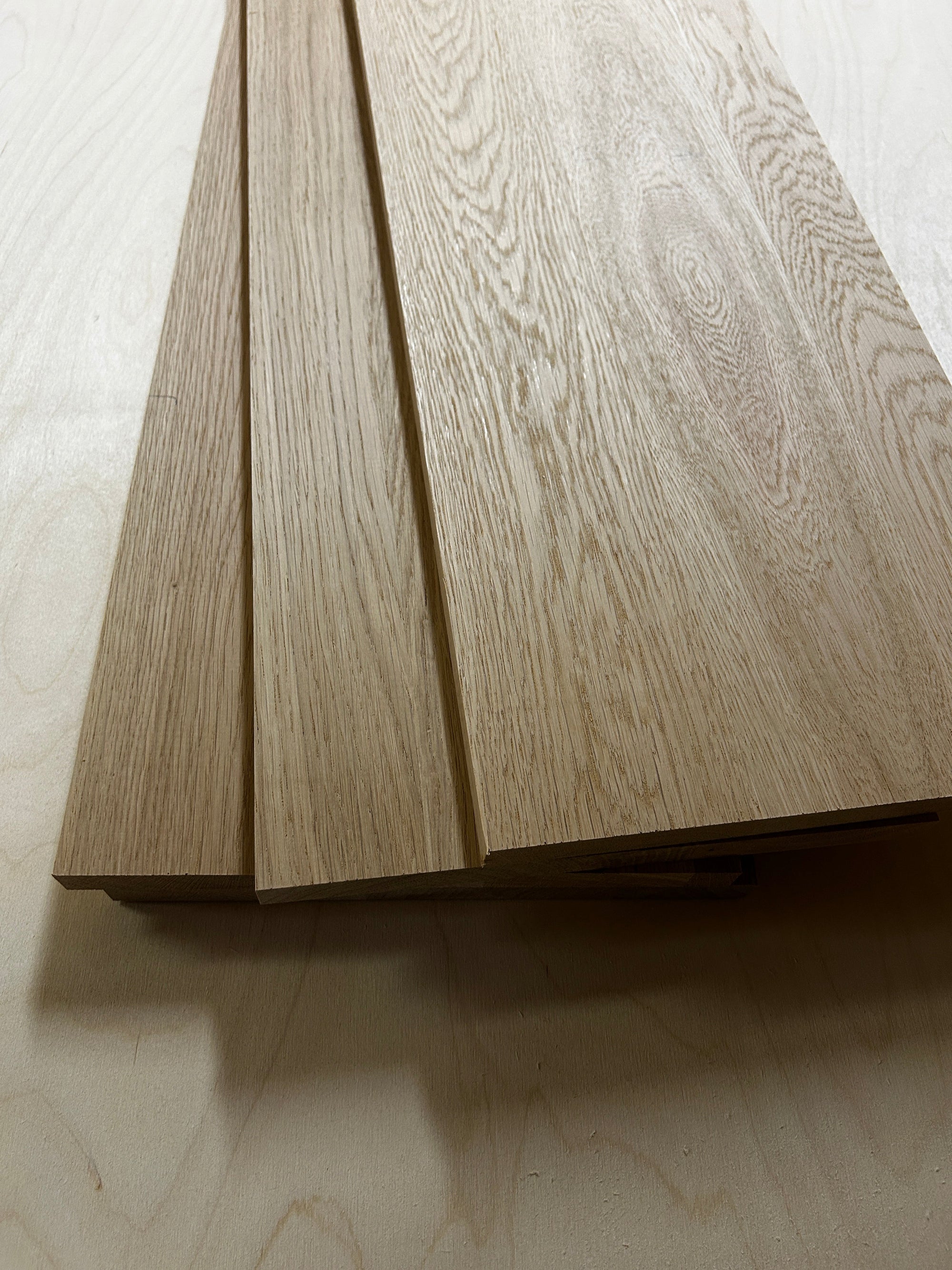
The style depends on materials that are what they appear to be: solid wood, linen, wool, paper, stone, ceramic. One honest oak piece does more for a Japandi room than five clever imitations — grain and knots are the point, not a flaw. (If you want the full argument, we wrote about solid oak versus the imitations.) Linen bedding in a natural tone, slightly rumpled, beats pressed polyester every time — wabi-sabi forgives creases; it does not forgive shine.
Keep the profiles low and the floor visible
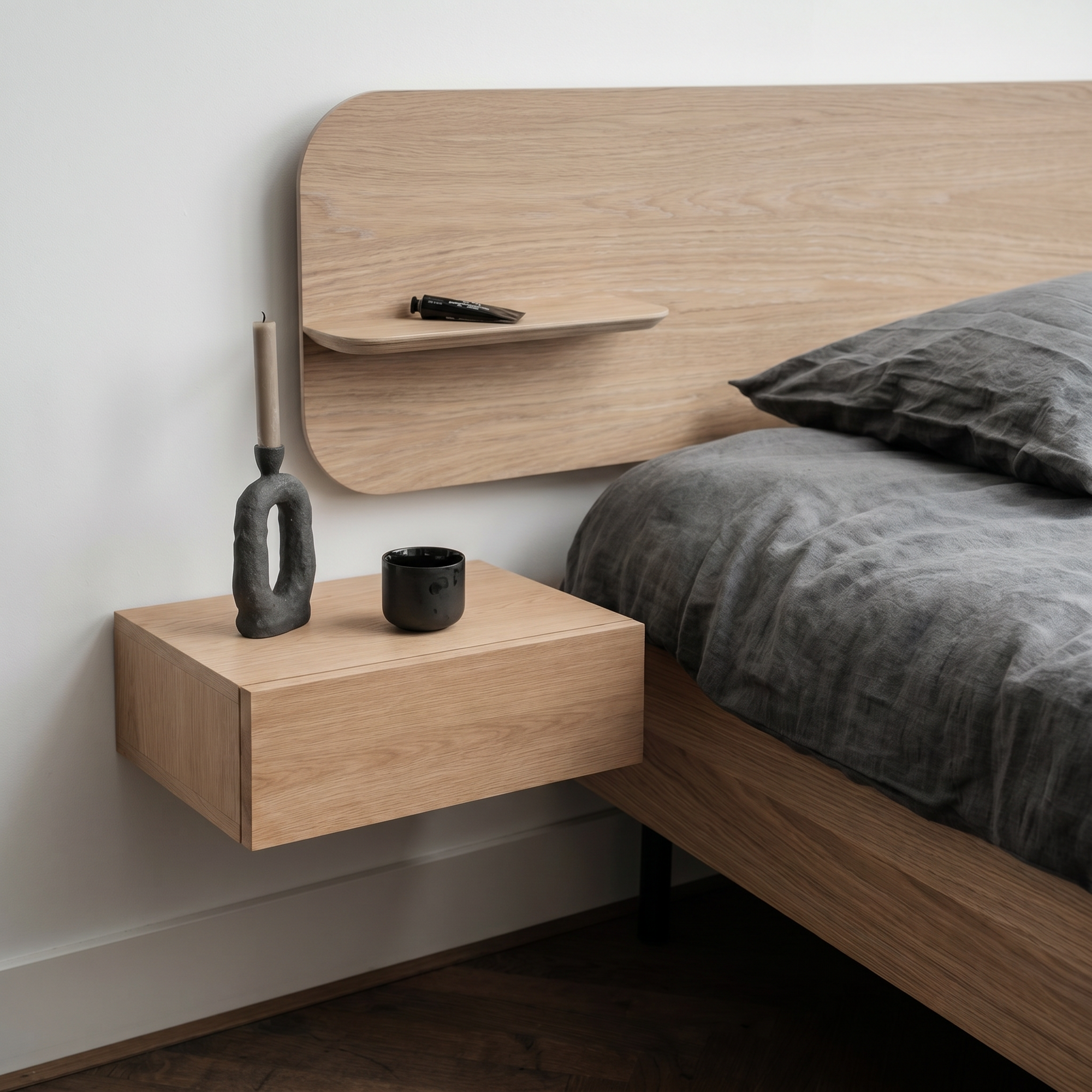
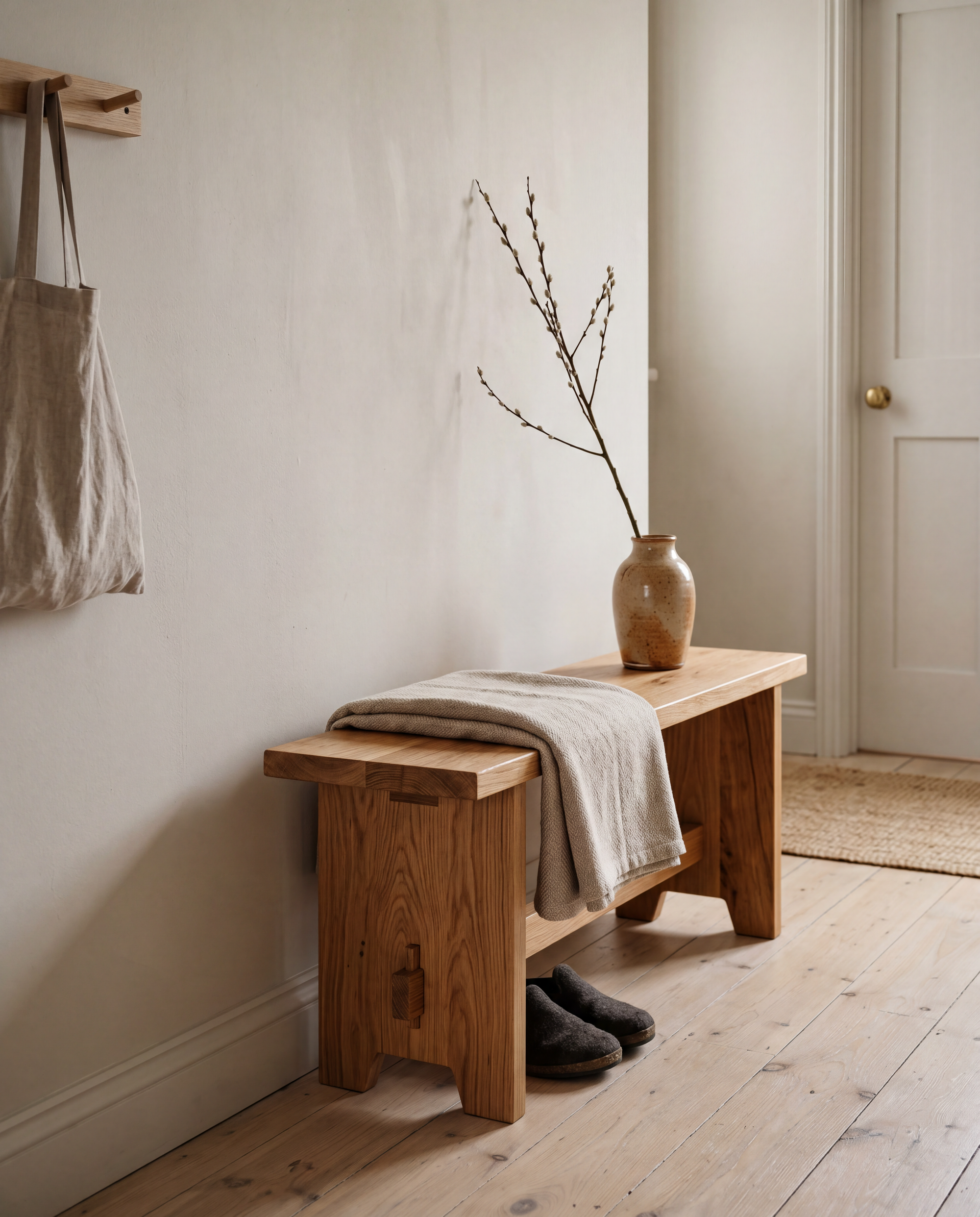
Japanese interiors sit low — low bed, low sightlines, generous negative space. You do not need a futon: a simple bed frame plus a floating bedside table achieves the same visual quiet, because the wall-mounted piece keeps the floor line unbroken. The more floor you can see, the larger and calmer the room reads. This is where fewer, better pieces beat more storage: a single oak bench at the foot of the bed replaces a chair-pile and gives the room a horizon line.
Layer the light, lose the glare
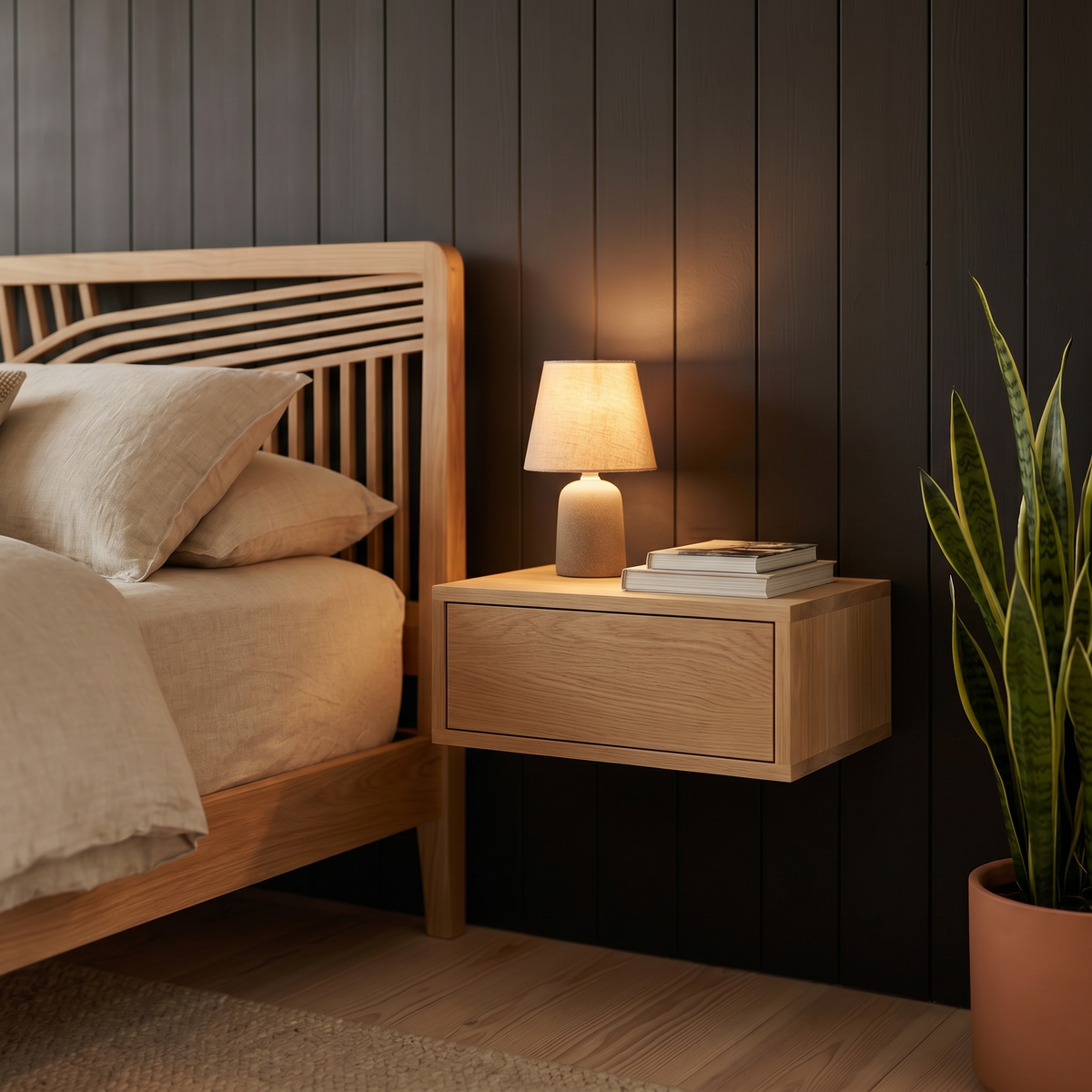
One ceiling light on full blast kills the mood instantly. Aim for three sources, all warm (2700 K or lower): a small lamp on the nightstand, something at mid-height, and if you can, a paper or linen shade that glows rather than shines. Japandi evenings are lit like a lantern, not an office.
Storage: closed, quiet, minimal
Clutter is the enemy of the whole idea, so storage should swallow things silently — drawers over open shelving, soft-close over slam. A nightstand with one drawer holds the honest mess of daily life; the surface holds three objects, not thirteen. Our bedside table size guide covers the practical numbers.
One imperfect thing
Finish the room with a single object that carries time in it: a handmade ceramic, a linen throw that creases, a branch in a vase, a piece of wood whose grain wanders. Wabi-sabi needs one element that is visibly natural and visibly imperfect — it is what stops minimalism from feeling empty.
The five-minute checklist
Warm palette, five colours max · one honest solid-wood piece · floor kept visible, profiles low · three warm light sources · closed storage, three objects per surface · one imperfect, natural object. That is the whole style — everything else is marketing.
If you are starting from the bed outwards, our most loved pieces show which oak nightstands and benches customers build these rooms around — each one handcrafted in Poland and built to last generations.

Michał · founder, FUKUIDesigns the pieces, chooses the boards, writes the journal. Questions: info@fukui.store