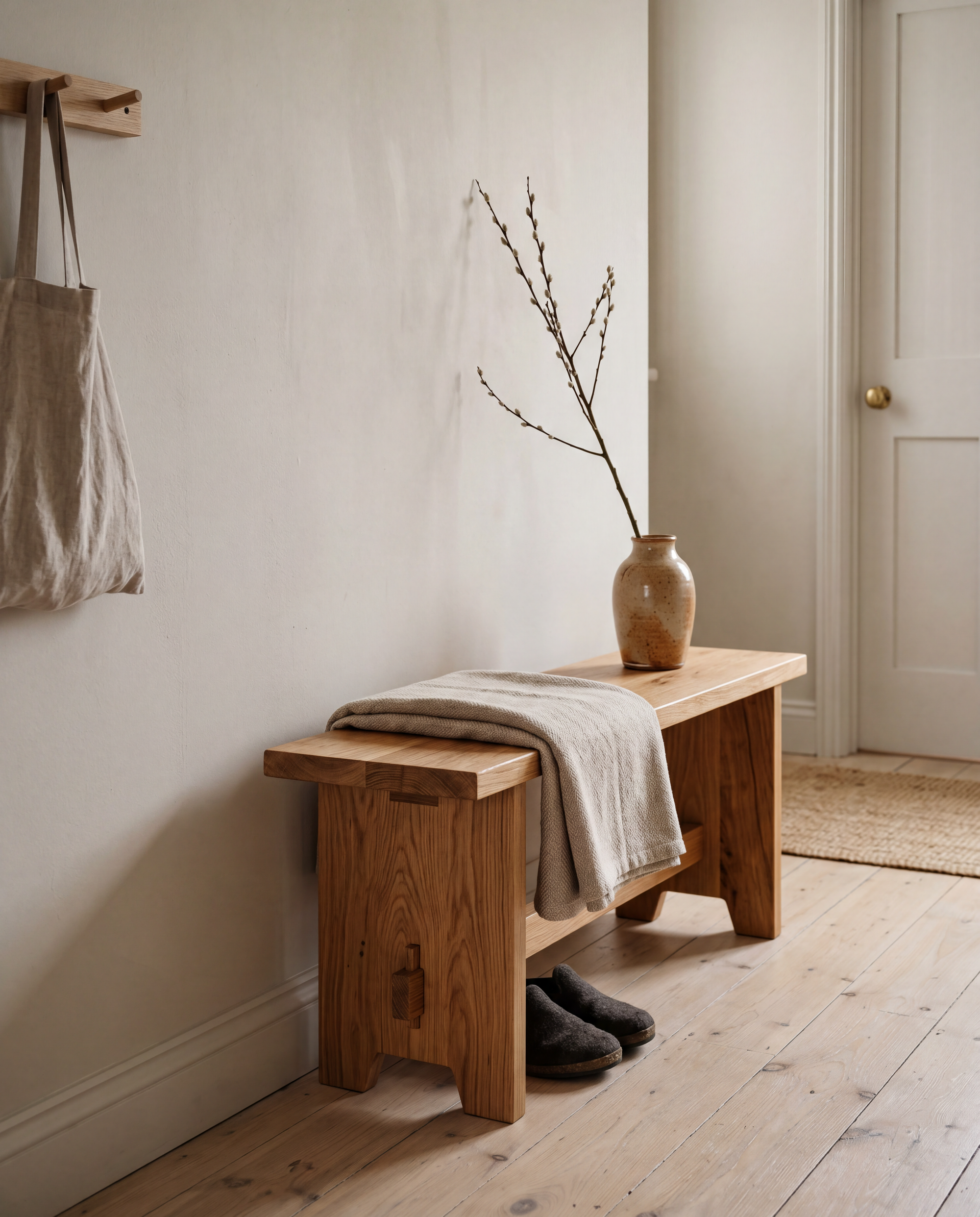

A bedside table is used more often than almost any other piece of furniture — every morning, every night — yet most are bought by eye. Ten minutes with a tape measure will get you a piece that fits your bed, your wall and your habits. Here are the numbers that matter.
Height: level with the mattress
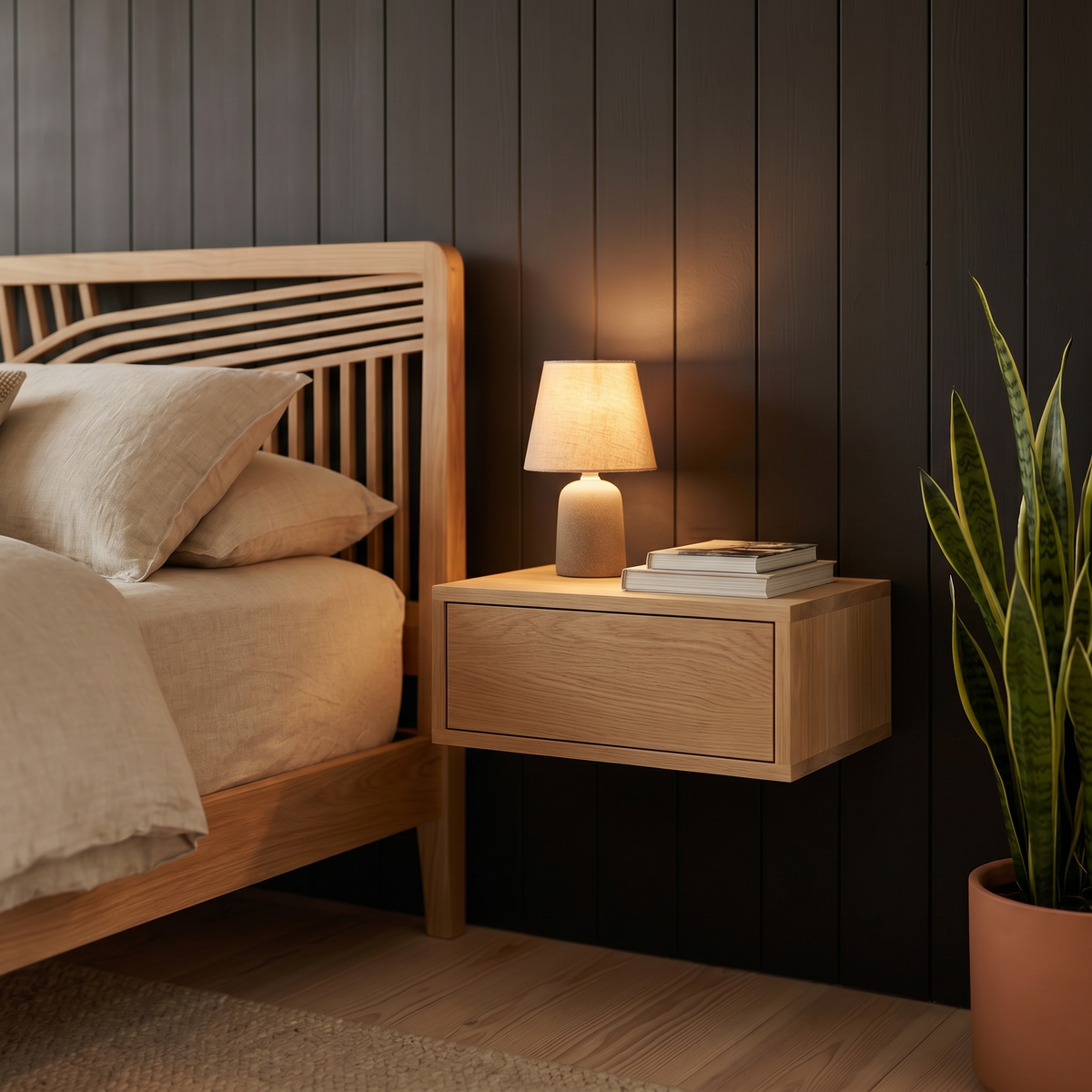
The rule that never fails: the top of the nightstand should sit level with the top of your mattress, or up to 5 cm above it. Reaching for water or a phone at 3 a.m. should not involve looking. Measure from the floor to the compressed mattress top — for most beds that is 55–65 cm. A wall-mounted table wins here, because you set the height to the centimetre instead of hoping the legs cooperate; our mounting guide covers exactly how.
Width: 40 cm is the sweet spot
A lamp, a book, a glass and a phone need roughly 35–40 cm of surface. That is why 40 cm is our standard width — enough for real life, narrow enough for real bedrooms. Go to 50–60 cm when the bed is king-size (proportion matters: a wide bed dwarfs a tiny table), when the table doubles as a display surface, or when you simply have the wall to spare. All our bedside tables come in 40, 50 and 60 cm; other widths can be made to order.
Depth: less than you think
30–35 cm of depth holds everything a nightstand should hold. Deeper tables eat walking space beside the bed and collect clutter. Leave at least 60 cm of clear floor beside the bed to walk comfortably — in a narrow bedroom, a shallow floating table is often the difference between a bedroom that flows and one you sidle through.
Floating or freestanding?
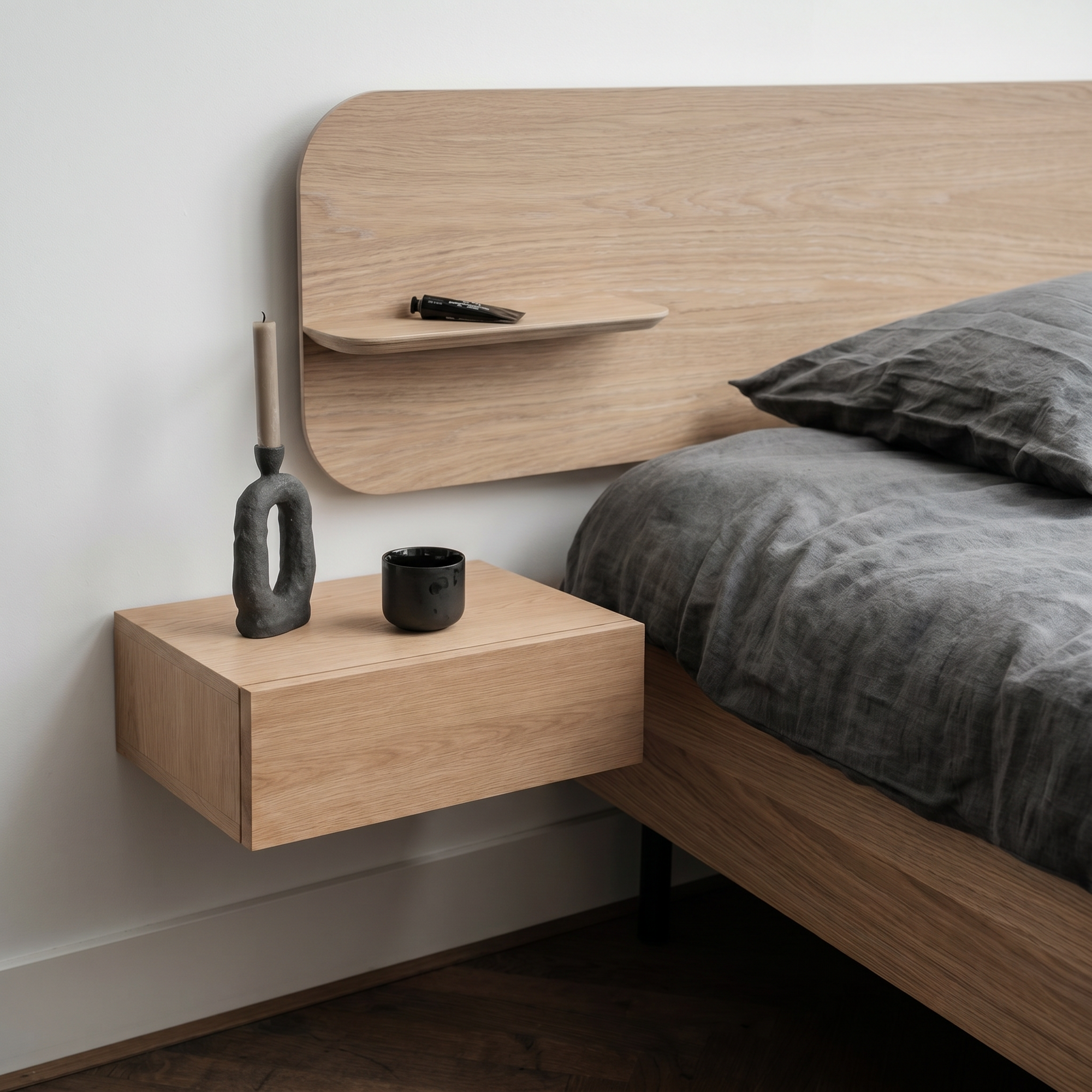
Floating keeps the floor clear, makes robot vacuums happy, sets any height you like, and visually enlarges a small room. It needs one honest wall and twenty minutes of drilling.
Freestanding moves with you, needs no tools, and offers more storage — our two-drawer pieces are freestanding for exactly that reason. Renters and frequent movers usually go this way.
There is no wrong answer; there is only your wall, your lease and your vacuum.
One drawer, two drawers, open shelf
Think about what actually lives beside your bed. Chargers, medicines and tissues want a drawer — ideally soft-close, so midnight stays quiet. Books you are actually reading want an open shelf, like the Toyama offers. Two drawers — like the Akita — suit a shared bed with one table, or anyone whose nightstand is honest storage rather than a display plinth.
Matching two tables
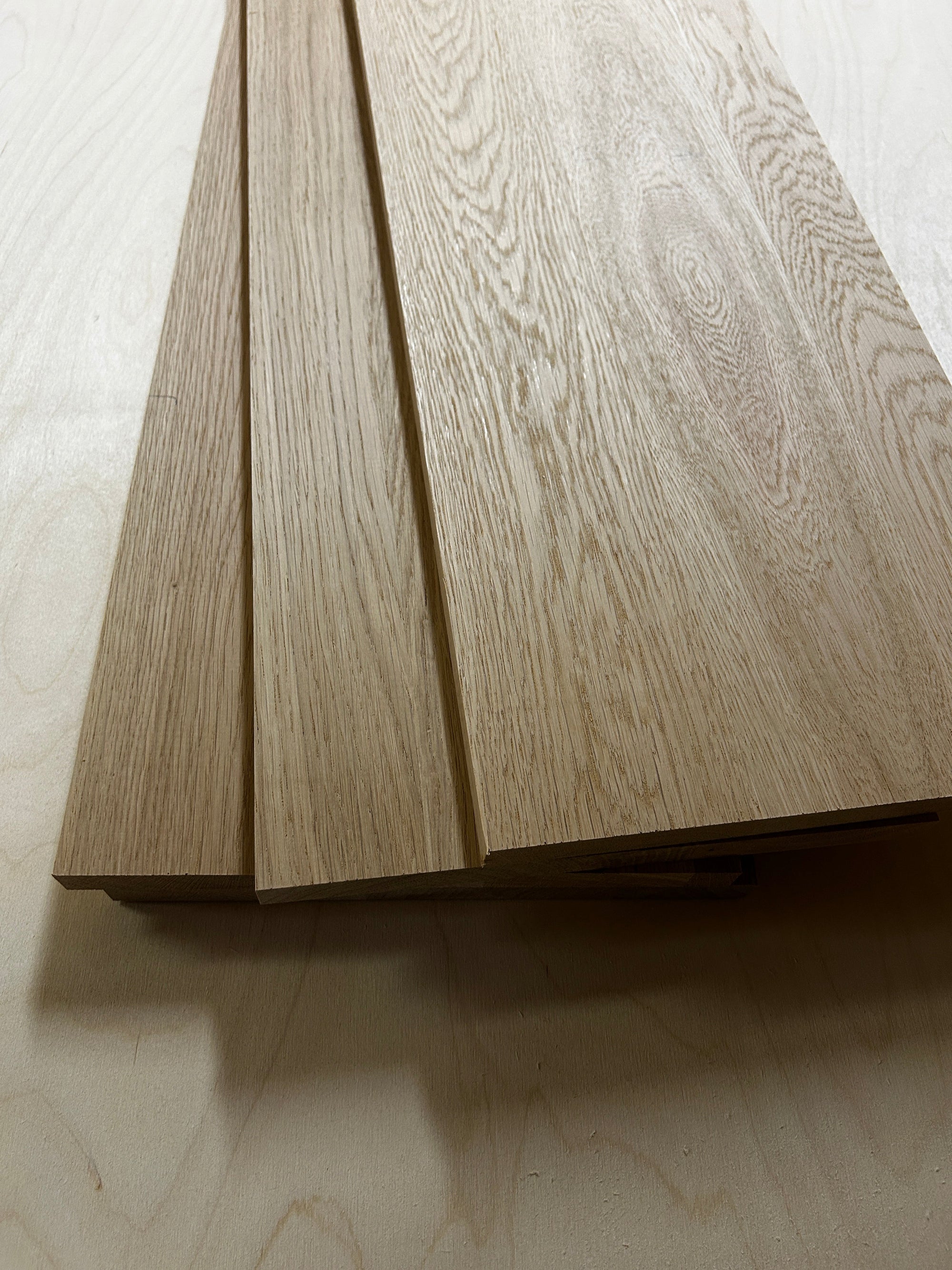
Two identical tables flanking the bed read calm and hotel-like; deliberately mismatched heights read curated — but only when the widths agree. If you buy a pair from us, they are made from the same batch of oak in the same days, so the grain and tone sit close together. Most of our pieces offer a small pair discount right on the product page.
Quick reference
Height: mattress top, +0 to +5 cm · Width: 40 cm standard, 50–60 cm for large beds · Depth: 30–35 cm · Walkway beside bed: 60 cm minimum · Load: our wall-mounted tables carry 20 kg on top, 10 kg in the drawer.
Still deciding between sizes? Write to us with your bed height and wall width — we size pieces for customers every week.

Michał · founder, FUKUIDesigns the pieces, chooses the boards, writes the journal. Questions: info@fukui.store