
“Oak furniture” can mean three very different things: solid oak, a millimetre of oak glued onto something cheaper, or a photograph of oak printed on foil. All three can look similar in a showroom photo. They do not age, repair or last the same way. Here is the honest comparison — including where the cheaper options genuinely make sense.
What each one actually is
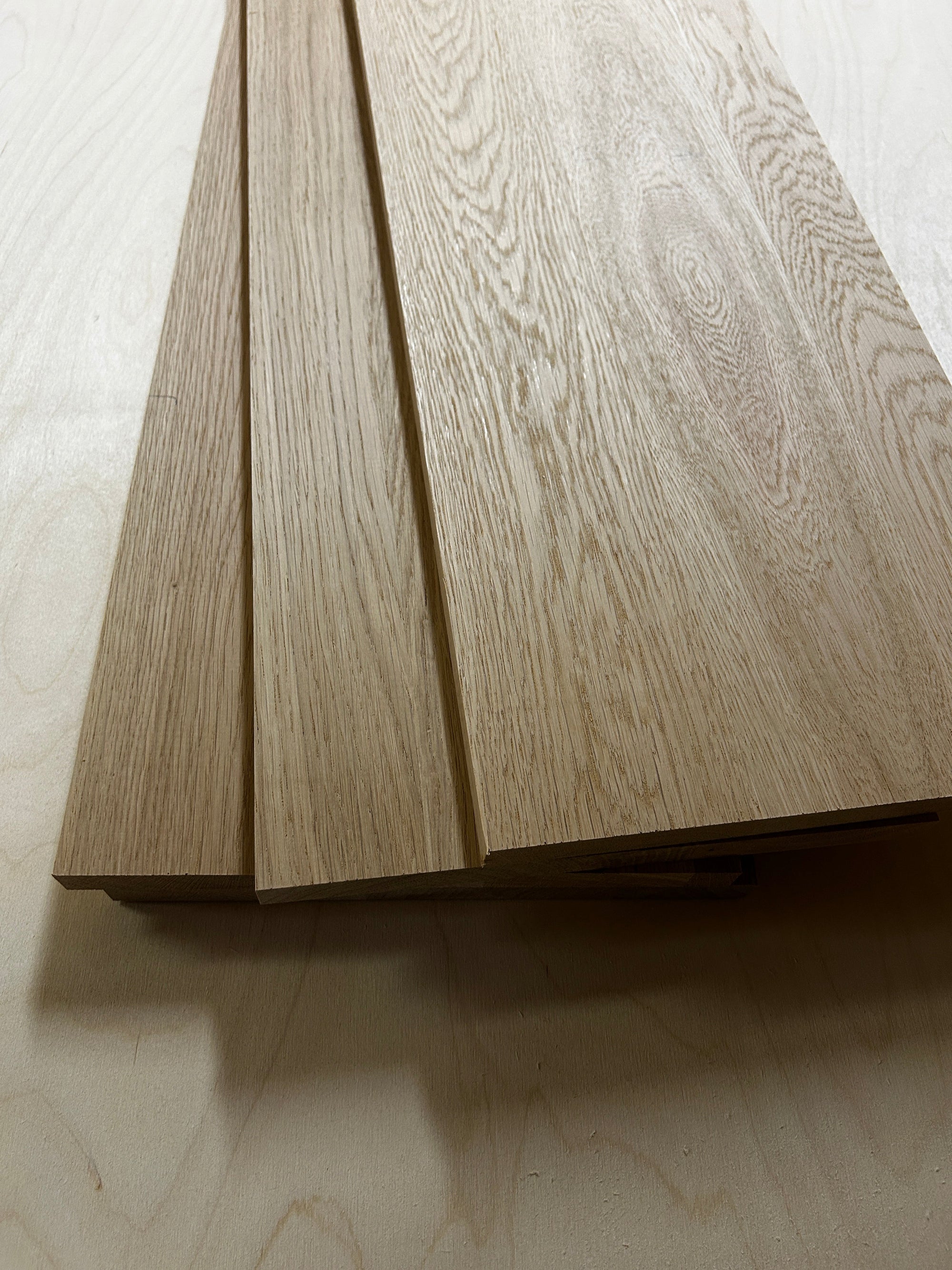
Solid oak is boards of the tree itself, glued edge to edge and machined into panels. The grain runs through the full thickness — cut it anywhere and it is oak all the way.
Veneer is a 0.5–1 mm slice of real oak glued onto a core of MDF or chipboard. The surface is genuine wood; everything beneath it is not.
MDF with foil or lacquer is compressed wood fibre with a printed or painted surface. Any “grain” you see is a photograph.
Durability: the edge test
Daily life attacks furniture at its edges and corners — keys, vacuum cleaners, moving day. Solid oak shrugs this off: a dented edge is still oak, and oak is hard. Veneer’s weak point is exactly there: once the thin skin chips at an edge, the brown fibreboard underneath shows, and no polish hides it. Foil-wrapped MDF peels the same way, and moisture makes fibreboard swell permanently — a wet glass left overnight can leave a raised bubble no cloth will fix.
Repairability: the 10-year question
This is the biggest practical difference. Solid wood is repairable essentially forever — scratches sand out, dents steam out, a tired surface can be refinished to new. Veneer can only be sanded once, carefully, if at all; sand through the millimetre and the piece is done. MDF cannot be meaningfully repaired — damage is permanent, which is why such furniture is priced to be replaced, not kept. Our care guide shows how little work solid oak actually needs.
How to tell them apart in a shop
1. Look at the end grain. On solid wood, the pattern on the edge continues the pattern on the top — growth rings wrap around the corner. On veneer the edge either repeats too perfectly or is banded with a strip.
2. Check the underside. Manufacturers save money where you do not look — raw grey-brown fibreboard under a “wood” top tells you everything.
3. Lift it. Solid oak is heavy; a suspiciously light “oak” cabinet is a suspicious cabinet. (Fair warning: MDF can be heavy too — weight rules furniture in, not out.)
4. Repeating grain across doors or drawers means printed foil — nature does not copy-paste.
Where cheaper materials make sense
Honesty cuts both ways. Veneer is a fair choice for very large flat surfaces — wardrobe sides, office desks — where solid wood would be costly and heavy. MDF is stable and paints beautifully; for a child’s room repainted every few years, it is rational. The problem is not that these materials exist — it is furniture pretending to be something it is not.
Where we stand
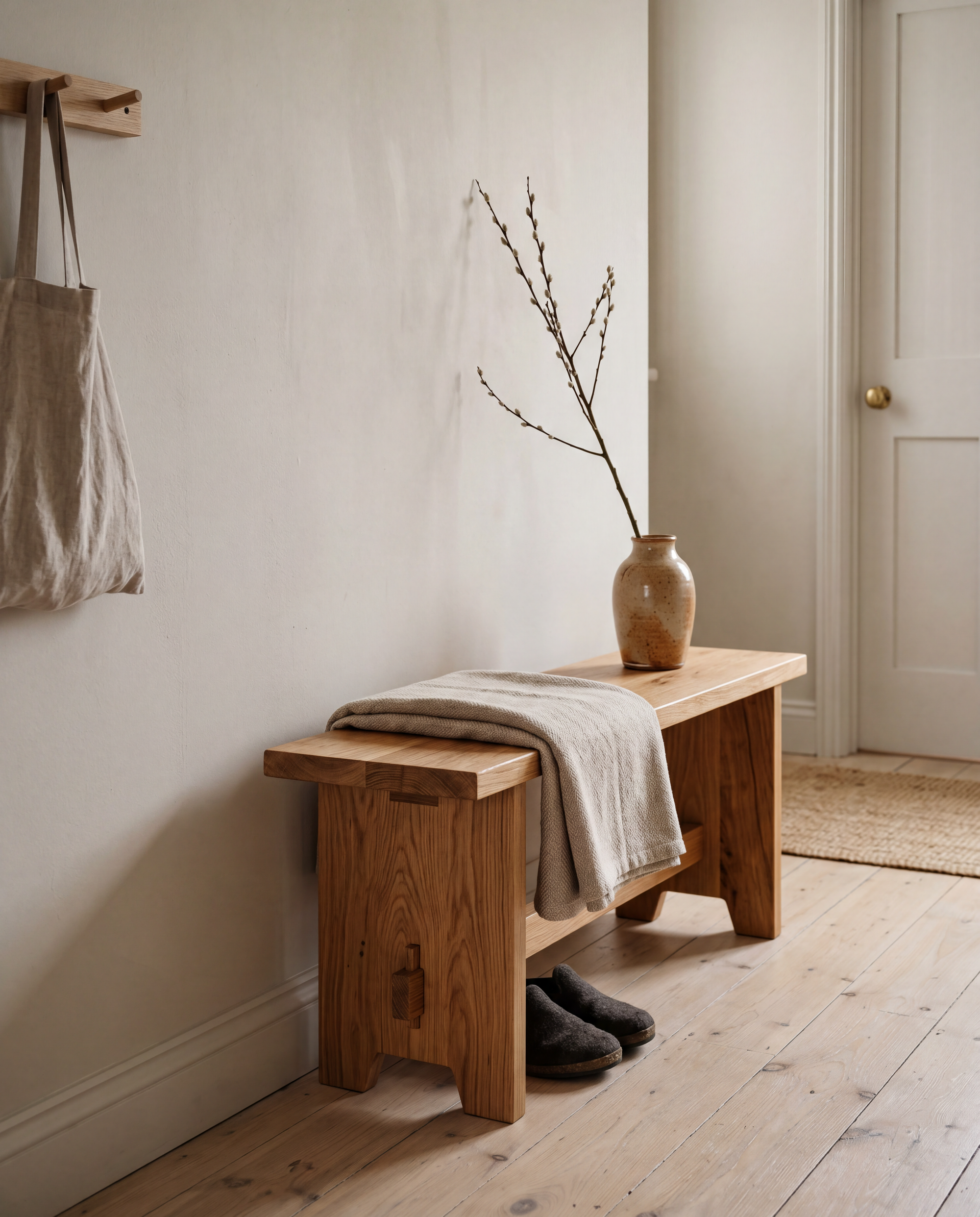
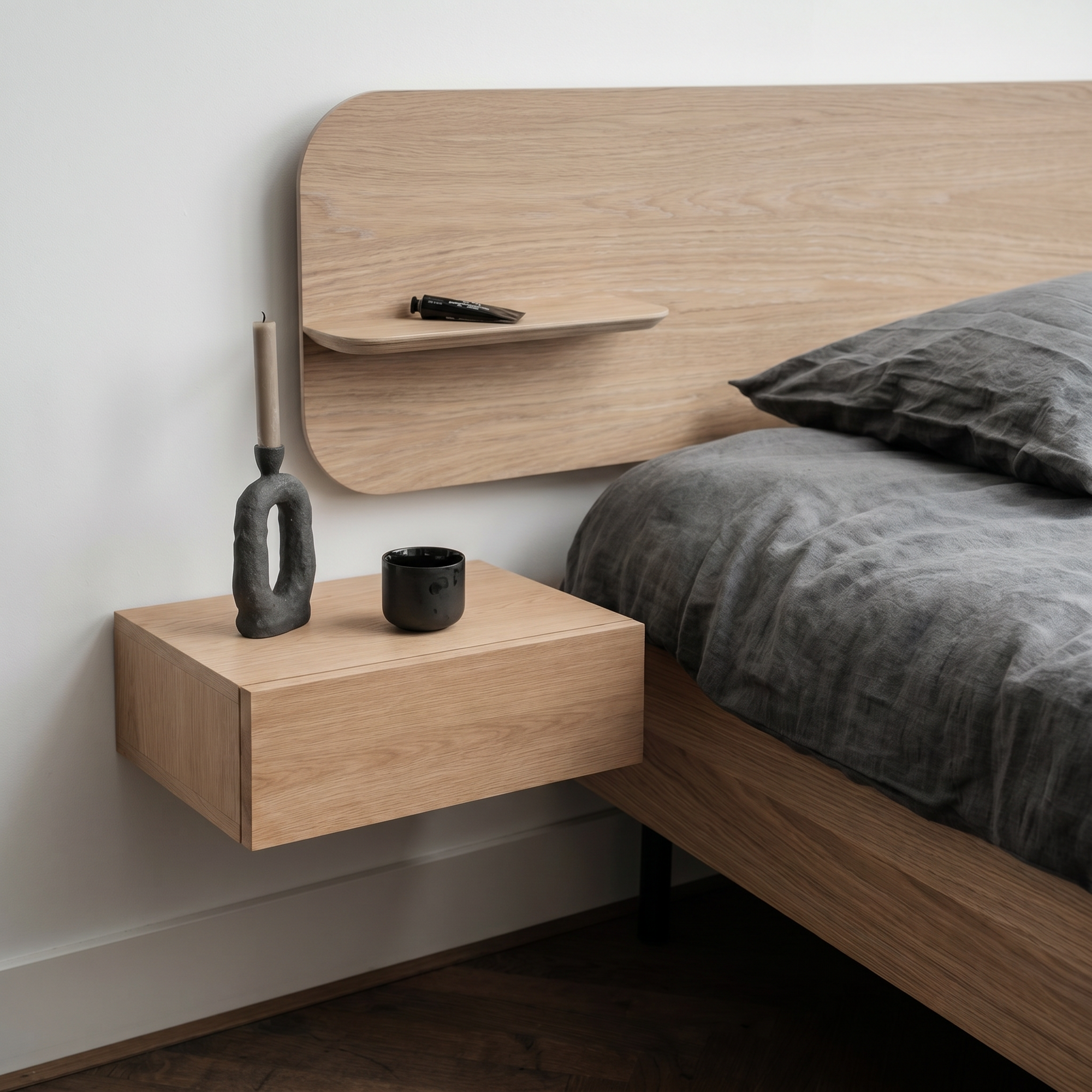
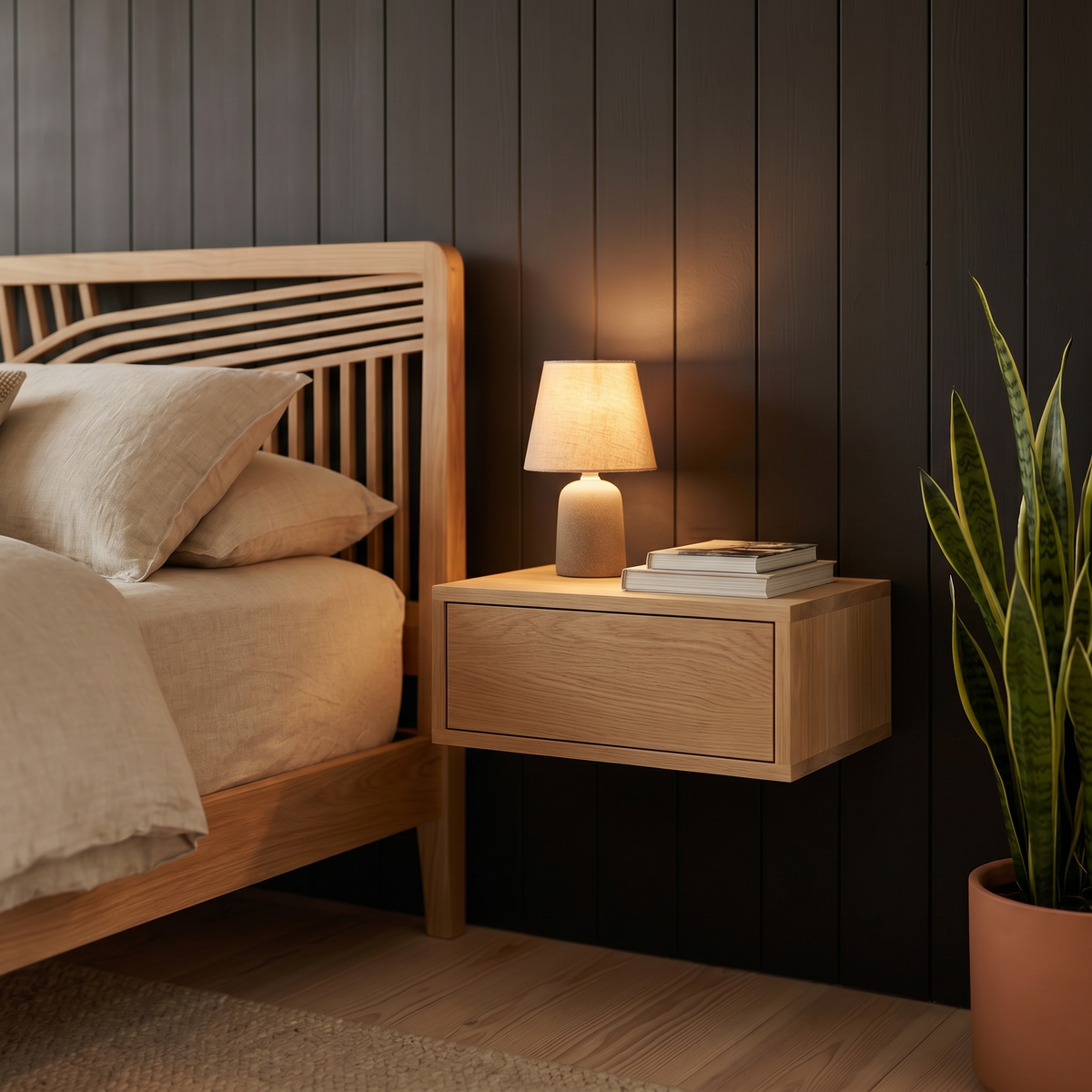
Every FUKUI piece is solid European oak, 18 mm, FSC-certified, with no veneer and no MDF. The one exception we state openly: drawer boxes are birch plywood — lighter than oak, dimensionally stable, and it keeps the soft-close runners aligned for years. That is an engineering choice, printed on every product page, not a secret under the foil. If you want to feel the difference before buying, our finish samples are cut from the same boards as the furniture.

Michał · founder, FUKUIDesigns the pieces, chooses the boards, writes the journal. Questions: info@fukui.store