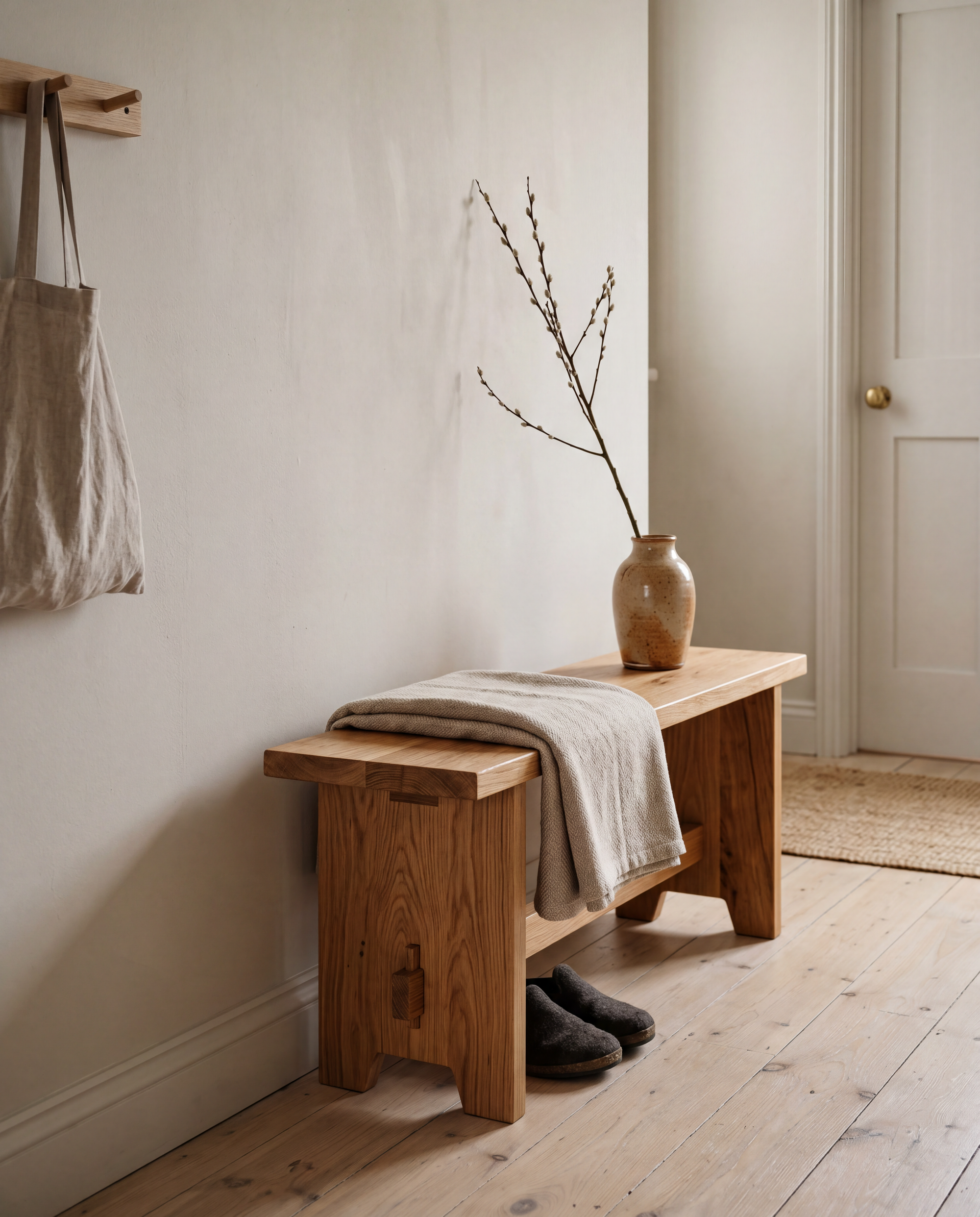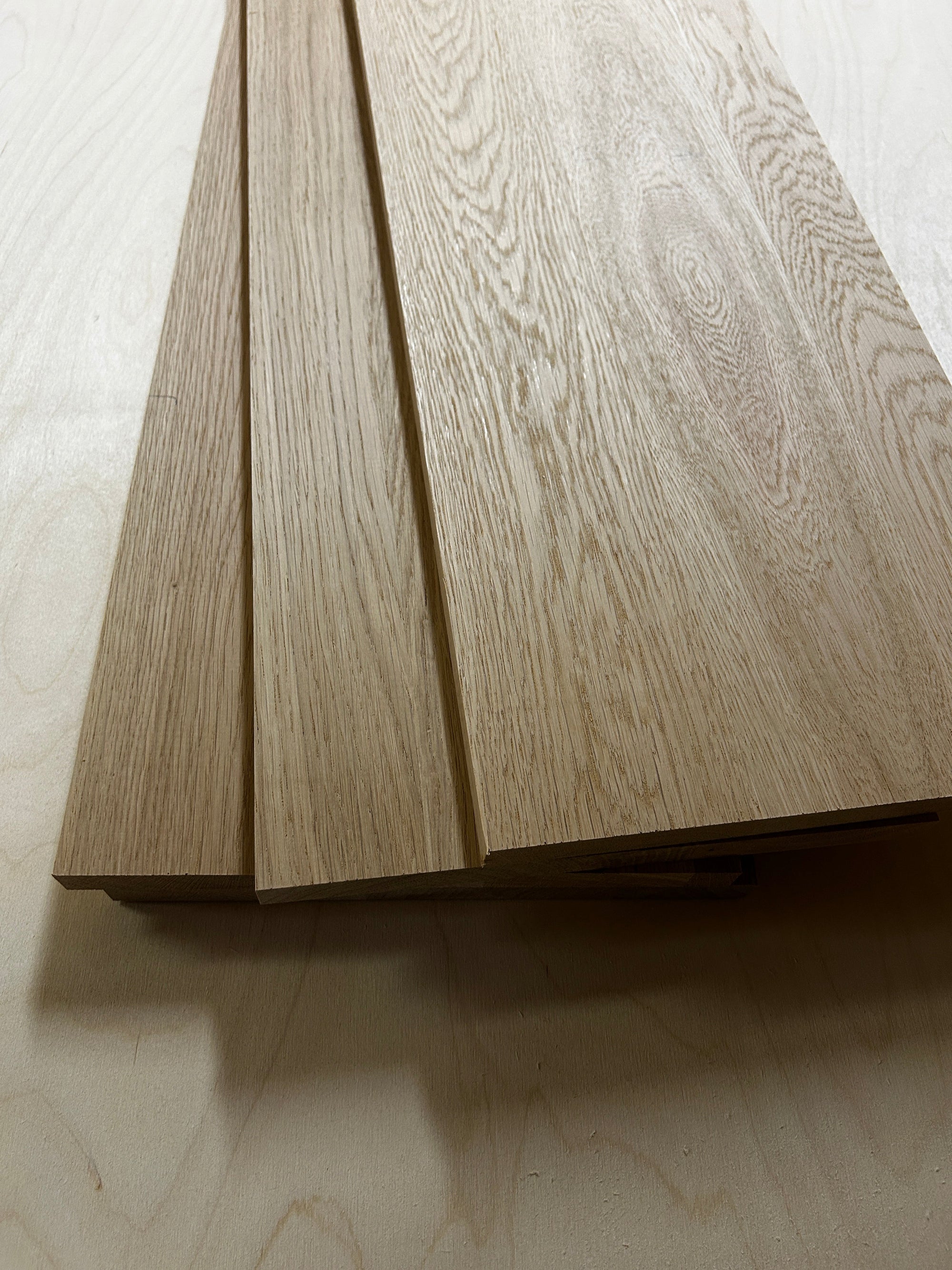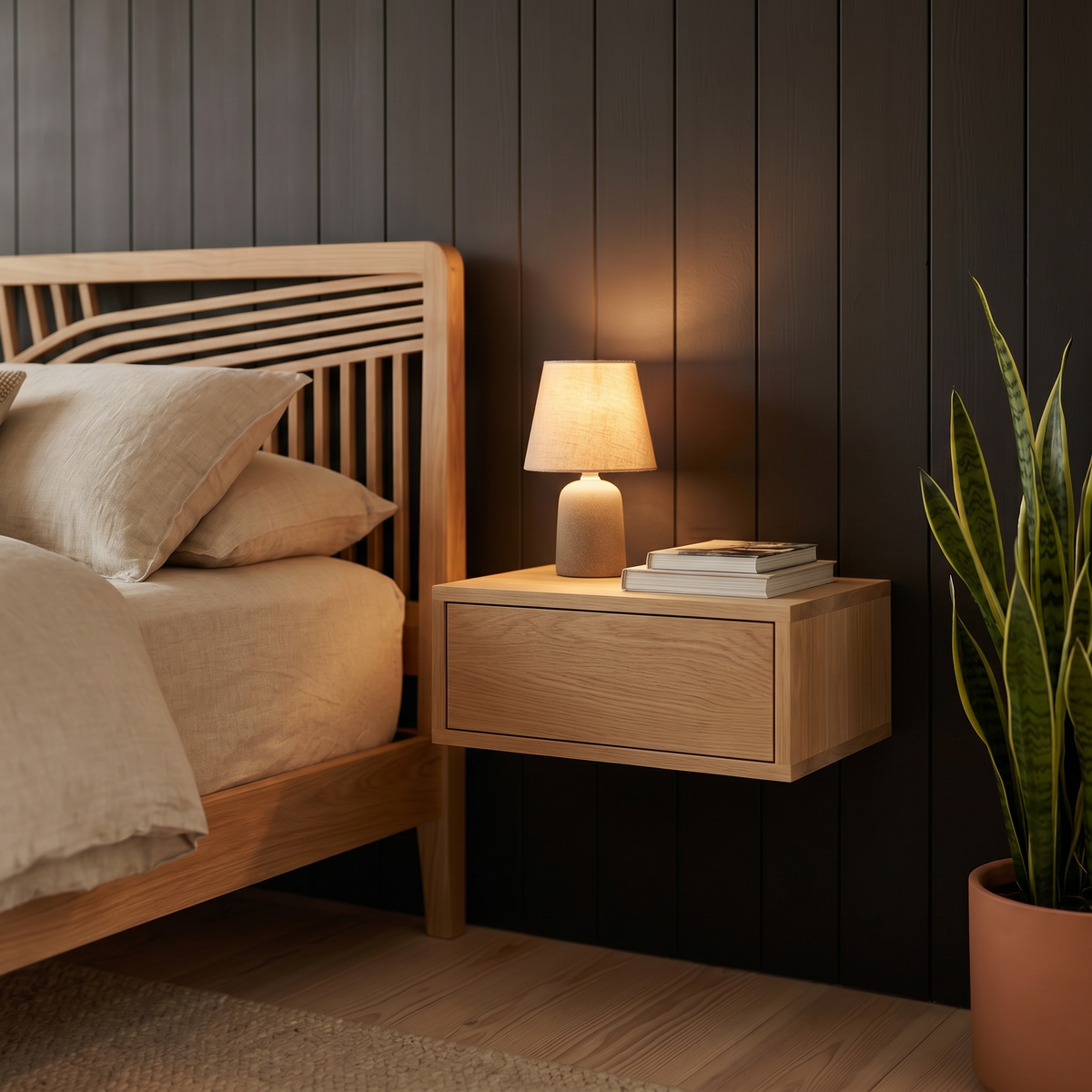

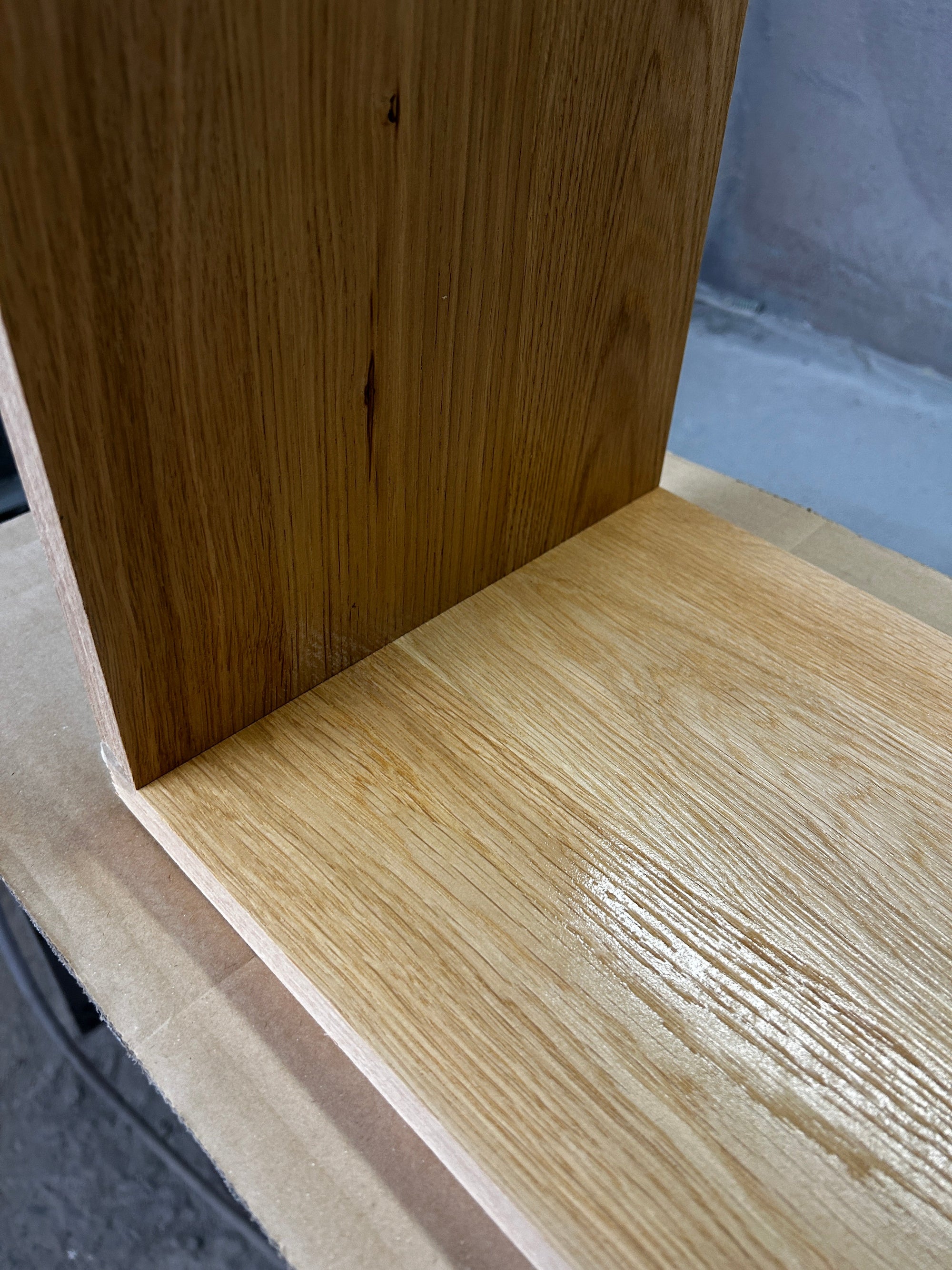
Solid oak is one of the few materials that genuinely improves with age — if you let it. The good news: caring for a lacquered oak piece takes minutes a month, not hours. This is the routine we recommend for every piece that leaves our workshop, and what to do when life happens to it.
Know your finish
Every FUKUI piece is sealed with two coats of matte acrylic lacquer. Unlike oiled wood, lacquered oak does not need feeding, waxing or re-oiling — the lacquer forms a thin, water-resistant skin that keeps coffee, cosmetics and dust out of the grain while letting the texture show through. That one fact simplifies everything below.
Everyday cleaning
A soft, slightly damp cloth is all you need — wipe with the grain, then dry with a second cloth. For fingerprints or stickiness, a drop of mild dish soap in the water is fine. Avoid all-purpose sprays, alcohol, ammonia and anything labelled “for shine”: aggressive solvents dull matte lacquer, and silicone polishes build a film that is hard to remove.
Water rings and spills
Wipe spills when you see them — the lacquer buys you time, but standing water will eventually find an edge or a seam. A fresh white ring from a cold glass usually disappears once the moisture trapped in the finish evaporates: leave it overnight before doing anything drastic. Persistent rings can often be coaxed out with gentle warmth — a hairdryer on low, kept moving, 10–20 cm away.
Scratches and dents
Fine scratches in the lacquer are surface stories, not damage — on a matte finish they blend in far more than on gloss. For a deeper scratch that catches a fingernail, touch-up is possible: light sanding along the grain with 240-grit and a thin coat of matte acrylic lacquer from any hardware store. A dent in the wood itself can sometimes be steamed back — damp cloth over the dent, tip of an iron for a second or two, repeat — because oak fibres are compressed, not broken. When in doubt, send us a photo and we will talk you through it.
Sun, radiators and humidity
Oak is a natural material and keeps responding to its environment.
Sunlight deepens oak’s colour over the years — most people love this. If a piece sits in strong direct sun, rotate the objects standing on it occasionally so the tan lines stay even.
Heat. Keep solid wood at least 30–40 cm from radiators and never place hot cookware directly on it — the lacquer resists hot mugs, but a pan is another matter.
Humidity. Wood moves with the seasons; 40–60% relative humidity is the comfort zone. In a very dry winter flat a humidifier protects both your furniture and your sinuses.
What not to do
No wax, no furniture oil, no silicone polish on lacquered oak — they cannot penetrate the finish and only leave residue. No melamine “magic” sponges — they are micro-abrasives and will burnish matte lacquer shiny. No soaking-wet cloths, and no dragging rough ceramics across the surface — felt pads under anything you move daily cost pennies.
The long view
A piece treated this way does not wear out; it wears in. The grain deepens, corners soften ever so slightly, and in ten years the piece looks like it belongs to your home in a way nothing new can. That is the whole idea — furniture built to last generations, not seasons. If you are still choosing your finish, order our finish samples and see Natural, Brown and Black oak in your own light before you decide.

Michał · founder, FUKUIDesigns the pieces, chooses the boards, writes the journal. Questions: info@fukui.store